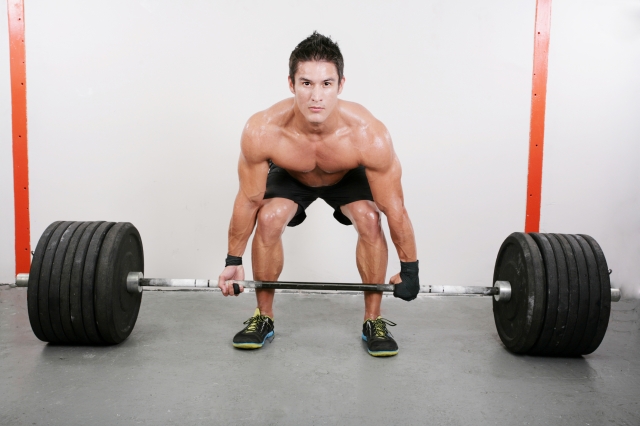
Performing the bend movement pattern well is all about being able to maintain a neutral spine while bending and extending. A neutral spine is when all the natural curves of the back are present, this means your lower back is very slightly arched, and your shoulders are back and your neck and head level with your spine.
Maintaining a neutral spine is essential for good spine health even when you are not carrying any load, therefore in instances where you are it is especially important to keep your spine neutral.
Whether you are picking up a box, or you shopping bags of the the floor or performing a 150kg deadlift ensure your spine with aligned correctly. On the way up you need to extend through your hips and drive through your heels while maintaining that neutral spine.
If you have read the previous articles then you will be aware that hip extension is a movement provided primarily by the gluteus maximus muscle but also involves the hamstring muscles, keeping these muscles strong will assist in performing the bend movement well and therefore protecting your spine.
Performing a standard deadlift with good technique is excellent for working the bend movement pattern. Try avoiding exercises like straight-legged-deadlifts and good mornings as these put a lot more pressure on your joints and hold no real advantages over the standard deadlift.
Baechle, T.R. & Earle, R.W. (2008). Essentials of Strength and Conditioning. Human Kinetics.
Martini, F.H., Nath, J.L. & Bartholomew, E.F. (2012). Fundamentals of Anatomy and Physiology. Pearson.
 Body KnowlEDGE